OGO!
For the Flavors of the Wadi
Hanukkah 2026: all events and dates →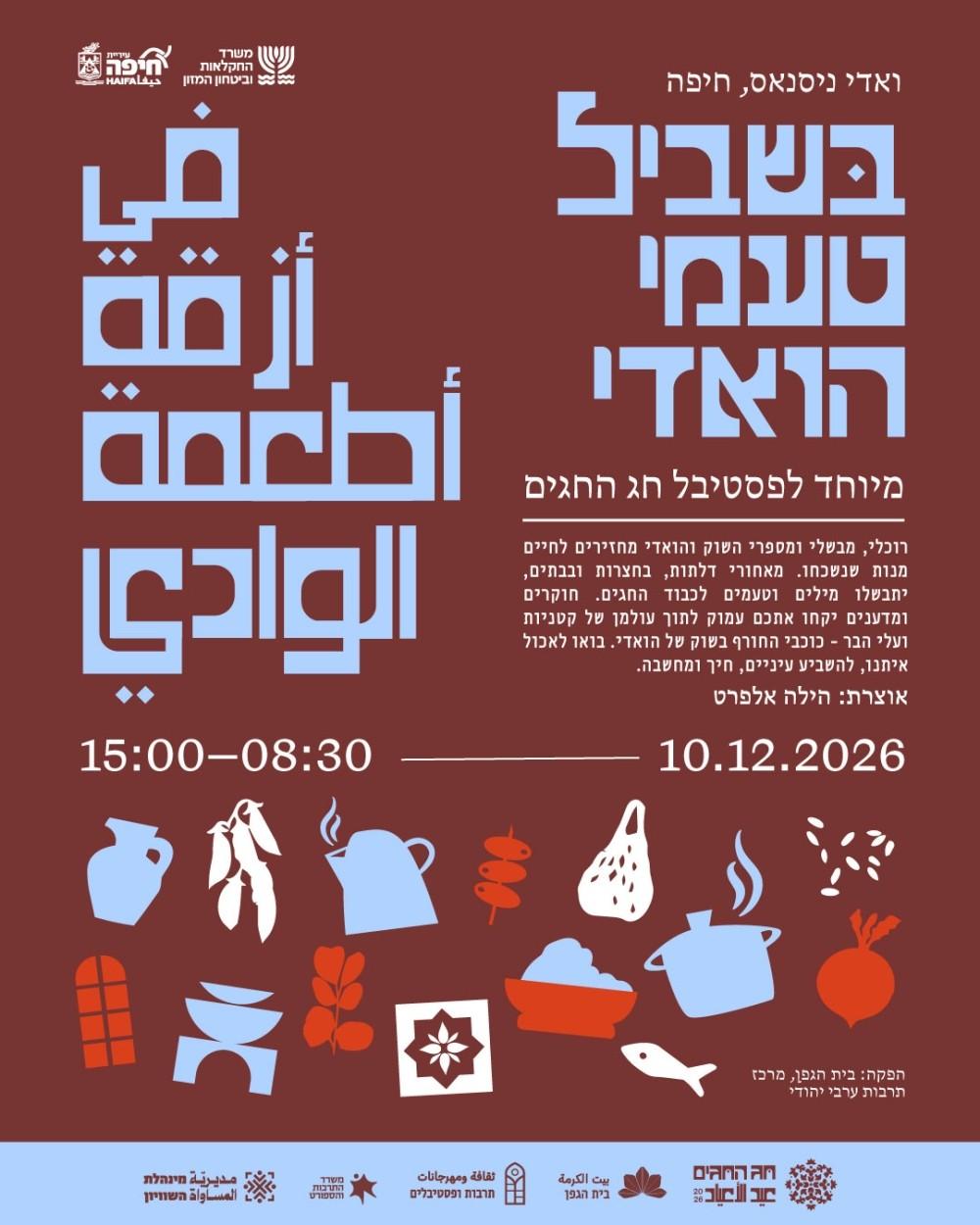
Thursday (in 16 days)
December 10
Beit HaGefen
HaGefen St 2, Haifa
Summary
A one-day culinary event will take place on Thursday, December 10, 2026, at Beit HaGefen in Haifa. The market will bring culinary dishes and memories back to life.
Descriptiontranslated from Hebrew (original)
For the Flavors of the Wadi | Along the Path of the Valley’s Flavors
On Thursday, December 10, from 08:30–15:00, for one day only, the market’s cooks and vendors will bring one dish from their culinary memory album back to life. A dish that was once sold in the market’s alleys or cooked in home kitchens, and is etched in their memory with longing. Whether personal or collective.
Alongside the regular menu, on one day each year, you will be able to find a taste from the memory that each of them has recreated, accompanied by a few words about the stories of the pots that have accompanied their lives.
Eateries and Bakeries
Abu Shakara Delicatessen | Khouri 38
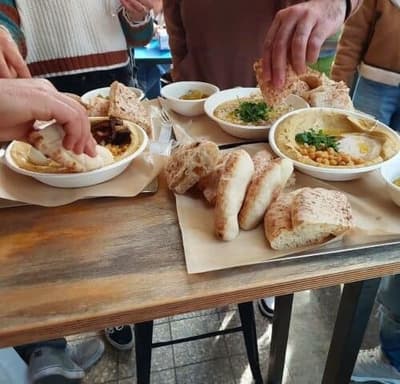
Manzale – Eggplant and Hummus
An eggplant and hummus dish documented in the memories of the residents of al-Zib village, north of Acre, and in family cooking traditions in Tiberias. Common in Palestinian Arab cuisine in the Galilee and in Jewish-Tiberian cuisine.
Abu Shakara Butcher Shop | Khouri 38
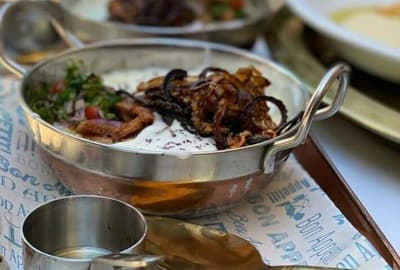
Raw Kibbeh with Goat Meat
Kibbeh nayyeh is especially associated with Syria and Lebanon. In northern Lebanon, a version documented as early as 1846 is known, made from raw goat meat pounded with bulgur and spices, and connected to goat-herding traditions in the mountainous regions. It is also one of the dishes served at the Abu Shakara family’s Christmas table.
Albeit Beitak | St. John 34
Fish Madfouna
A traditional fish and rice dish of fishing communities along the coasts of Palestine and Egypt. Its name comes from the Arabic root d-f-n, meaning “to bury,” because the fish in this dish is buried in rice. A dish known in the culinary traditions of Tantura, Jaffa, Gaza, and Damietta.
Project Sattoush | St. John 30
Barbara
A sweet wheat dish with warm spices, various nuts, and dried fruits, common among Christians in the Levant. Its name derives from Saint Barbara, in whose honor it is served in December. Its exact origin and first documentation are unknown, but it is connected to ancient traditions of ritual wheat cooking.
Nozha’s Kitchen Restaurant | St. John 33
Lamb Kibbeh – Stuffed Kibbeh with Lamb
This lamb kibbeh recipe was born from the words of Sami Michael, a resident of and lover of the Wadi. The aroma of kibbeh would fill the house.
“The enormous kibbeh filled the entire plate. It was thin, but contained a large quantity of lamb, roasted walnuts, pale raisins, spices from India, and plants that bloomed in the mountains of Kurdistan.”
Nadima Buffet | St. John 36
Wild Greens Stew
Mallow, chicory, spinach, or borage—the grandchildren of Nadima will prepare all the wild-plant dishes they learned to make from their grandmother. These dishes preserve ancient rural traditions of gathering and cooking, reaching back to the earliest times throughout the region.
They will also serve “Lemon”—the name their grandfather, Maurice Sbaiti, gave to a drink made from milk, lemon, and sugar, which he served at the first food stall in the market. The stall opened in 1963, and market vendors and porters came there to fill their stomachs with a fava-bean stew before and during the workday.
Abbas Oglu Sweets | Allenby 19
Awameh in Fragrant Geranium Syrup
Zalabia, awameh, or luqmat al-qadi—whatever you call the fried pastry in the Levant, the tradition of sweet fried dough has been documented in Arabic culinary literature since the tenth century. It is customary to dip it in sugar syrup flavored with rose water, orange-blossom water, or lemon. Local traditions also use syrup made with fragrant geranium leaves, known in Arabic as ‘itra.
Falafela Bakery | Wadi Nisnas Street 41
Sambousek
Makhdoos and Goat Labneh Spread
Sambousek, whether baked or fried, is common in Muslim, Christian, and Jewish culinary traditions in the Levant and the Middle East. It is documented in Arabic cookbooks dating back to the Middle Ages.
At Falafela, it will be filled with fresh za’atar leaves, sumac, first-press olive oil, and finely chopped onion. In addition, that day they will serve a creation from the baker’s imagination: dough topped with a spread made from goat labneh and makhdoos—small eggplants that are cooked, salted, stuffed with walnuts, garlic, and red pepper, and preserved in olive oil.
Hummus al-Sham | Wadi Nisnas Street 21
Rummaniyya
A traditional dish especially associated with Gaza and the coastal cities of Jaffa and Lydda. It is made from lentils, eggplant, pomegranate juice or molasses, garlic, olive oil, and sometimes tahini. A seasonal cooking tradition based on local agricultural produce, served hot or cold. The joy of the poor at its finest, a dish that has gradually disappeared over the years.
The Elders’ Falafel | Wadi Nisnas Street 18
Falafel Arayes
In 1950, George and Najla Afara opened their falafel stall on the outskirts of the market. Najla prepared the mixture at home so that no one would see exactly what she put in it. The balls were fried on-site over a Primus stove.
In 1984, Afif Sbaiti, a regular customer, bought the place. In one interview, he said that raw tahini is part of the secret of the falafel mixture.
Today, his son Jinan runs the place, and “falafel arayes” is a childhood memory from the home where falafel mixture was fried inside pita bread. A browned and wonderful vegan version of the classic meat arayes of the Levant, whose name means “brides.”
Arabica Wadi Coffee | Wadi Nisnas Street 44
Coffee arrived in our region—Jerusalem, to be precise—only in the sixteenth century, at the same time that coffeehouses opened in Istanbul and boisterous Cairo, and caused unrest in the Holy City. Neighbors who disapproved of idle sitting around the black drink, “the wine of Muslims,” sent letters to Istanbul in attempts to have the coffeehouses closed.
But the coffeehouses of Jerusalem continued to multiply, and when hookahs arrived in the eighteenth century, their victory was marked in the streets, as was that of the women who read the future in coffee grounds in home courtyards.
Julie Kitchen | Daniel 11
Green Shakshuka
One of the dishes that the Arabs of the Wadi learned from their Jewish neighbors was shakshuka, brought by immigrants from North Africa.
Ahmed Makhlouf, a Wadi native whose kitchen has for years touched the boundary between the new and the traditional, will offer green shakshuka that day, made from wild greens—the green soul of Wadi Nisnas Market in winter.
What Else Is Happening?
Fawzia Masri’s Home | Caesarea 29, 2nd Floor
(Subject to availability)
- First round: 9:00–10:30
- Second round: 11:30–13:00
Fatayer
Stories and traditional pastries from Levantine cuisine, which Fawzia will fill with wild greens and serve with hamine eggs and matbucha—flavors that will awaken memories of another life.
From the days when her family shared their home kitchen with a Jewish neighbor who had immigrated from Morocco and with a Druze couple. Preparing the pastries is a shared family and community craft, beginning with gathering and cleaning the wild leaves, continuing with preparing and filling the dough, and bringing together hands, stories, and traditions passed from generation to generation and across religions.
The visit to Fawzia’s home will take place in groups and by advance registration only.
Al-Wadi Musical Instruments | Wadi Street 36
Master Class
- First round: 10:30–11:00
- Second round: 12:00–12:30
A master class with Bashara Dib about oud making, and about the power of sorrow, love, and the craft of longing held within the strings of this wonderful instrument.
Be Chef College | Khouri 2, Prophets Tower
Cooking Workshop
Time: 10:00
Shishbarak
Shush or shishbarak—two versions of the stuffed dumplings of Levantine cuisine. Like the Bukharan dushbara, they probably owe their name to joshpara, the ancient Persian name for stuffed dough dumplings.
Shishbarak is documented in Arabic culinary literature from the Middle Ages, and is usually filled with meat and onions and cooked in sour yogurt.
At 10:00, Be Chef College will hold a workshop with Maha Issa, a Haifa resident, who will teach participants to prepare shishbarak stuffed with freekeh. Participation requires advance registration and payment.
In Praise of Mallow | Shabtai Levi 24, Engineers’ House Hall
Lecture
Time: 12:00
Determined to expand and enrich the range of foods we eat, Dr. Louis Bashir, head of the Food Department at Tel Hai University, set out to study mallow, which has been eaten for thousands of years throughout the region, from our area to the Fertile Crescent.
He found that the amount of protein in the plant compares favorably with that found in spinach leaves; its phenolic antioxidants are higher, its sugar content is lower, and it contains vitamin C. It was also found not to contain an acid present in spinach that interferes with mineral absorption.
A fascinating lecture about the food of the future found in the pots of the past, and about the wisdom of mothers revealed at its most glorious in the wisdom of the laboratory.
Admission is free but requires advance registration:
Link
Dr. Louis Bashir
Hummus, a Love Story | Shabtai Levi 24, Engineers’ House Hall
Lecture
Time: 13:15
Professor Ram Reifan is a pediatric gastroenterologist, researcher, and lecturer on nutrition, who previously served as head of the School of Nutrition Sciences in the Faculty of Agriculture and Food.
He knew all the legumes until he devoted himself to hummus. The man who developed a nutritious chickpea-based formula for children in Malawi succeeded in developing a method for refining a powder from the legume containing almost 92% protein.
It is a particularly successful source for substitutes for meat, fish, and dairy products, without the aftertaste that comes, for example, with pea-based substitutes.
With all due respect to soy—and he has great respect for the legume that has stood at the center of research for years—hummus is the plant capable of bearing the challenges of the nutrition of the future.
Forty-five minutes with an exciting researcher about the fascinating soul of the most familiar legume in the region.
Admission is free but requires advance registration:
Link
Professor Ram Reifan
A Connection Above the Wadi | Shabtai Levi 24, Engineers’ House Hall
Conversation for Two
Time: 14:15
Erez Golko, a Carmel native and pioneer of food tours in Wadi Nisnas Market, in conversation with Hila Alpert about a ten-year love affair, respect and appropriation, secrets and intrigues, food tourism and the good and bad it brings with it, and considered recommendations for building a pantry from everything the Wadi has to offer.
Admission is free but requires advance registration:
Link
Fermata | St. John 36
Performance
Performance times: 10:00–10:45, 11:05–11:50, 12:10–12:55, 13:15–14:00
Fermata is a musical ensemble led by Ghassan Biromi and Dr. Fadi Dib, combining original compositions with arrangements of beloved songs from Arabic, Middle Eastern, and Western music.
Ghassan is a musician and oud and percussion player. Dr. Dib is a pianist and lecturer at the Jerusalem Academy of Music and Dance.
Together they create a live and interactive performance that invites the audience to join in singing and rhythm.
Musical ensemble: Fermata
Artist: Fermata
Add to calendar
Share this event:
Similar events
Loading similar events...