OGO!
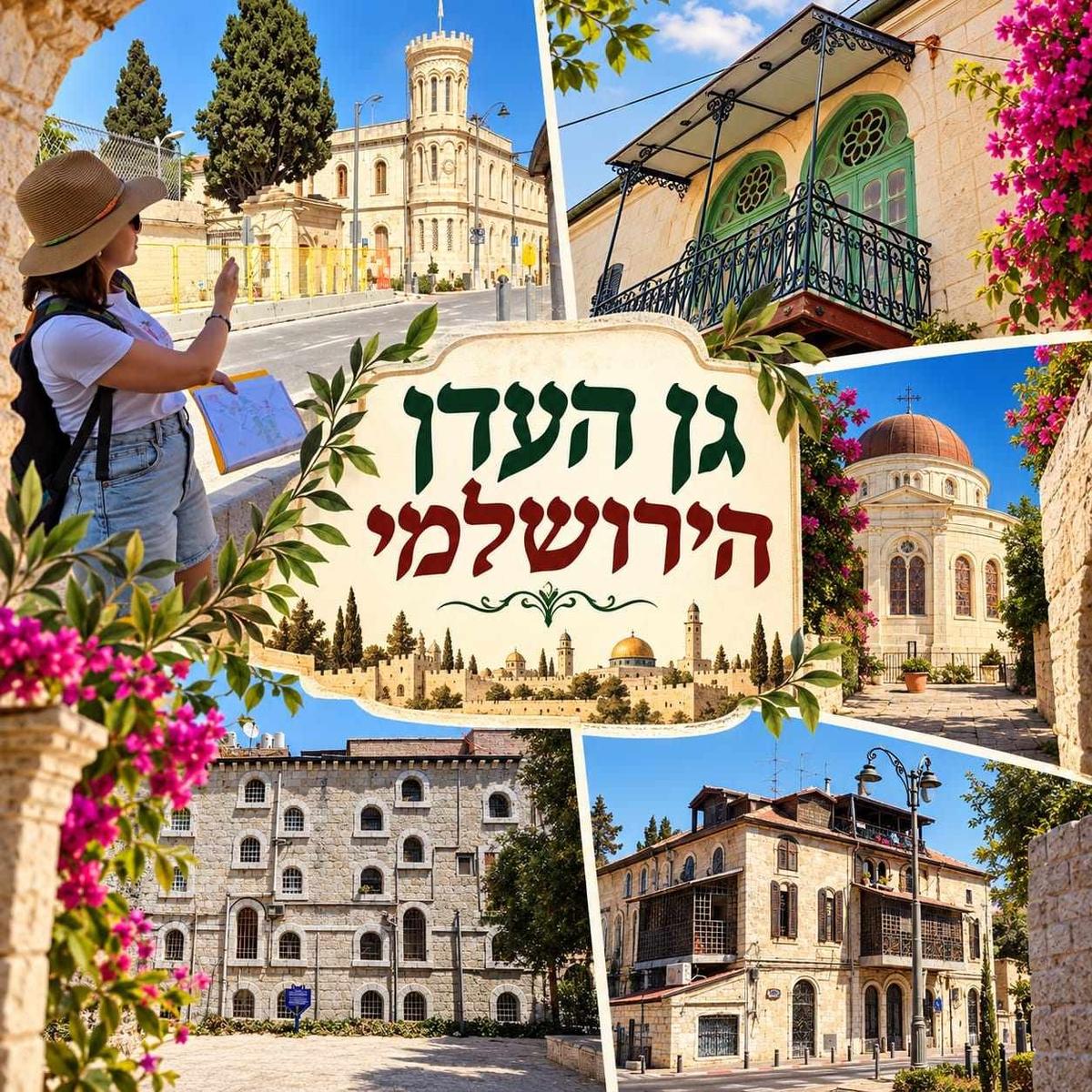
Friday 16/4: A Trip to the Jerusalem Garden of Eden
Friday (in 143 days)
April 16, 2027 at 10:00 AM
Castel National Park
Keren Kayemet St, Mevaseret Zion
Destination
Jerusalem
Key facts
- Difficulty
- easyAbout two kilometres, an easy urban tour
- Transport
- Self-arrival
Summary
Urban tour on conceptions of paradise in Judaism, Christianity, and Islam, on Friday, 27/11/2026, in Jerusalem. Guided by Sveta, covering approximately two kilometers.
Descriptiontranslated from Hebrew (original)
Tours and Legends · Jerusalem of Stories and People
The Jerusalem Paradise: Behind the Gates, Among Dreams
Is paradise a lost garden, life close to God, a monastery whose name promises tranquility, or a place where children felt free? We will set out with Sveta to explore concepts of paradise in Judaism, Christianity, and Islam, connecting them to Jerusalem on the ground: the Russian pilgrims, the Ethiopian Debre Genet compound, and the memories of Musrara’s children. This is a tour about faith, longing, and the gap between dream and reality.
Friday, November 27, 2026
Meeting at 10:00 in Jerusalem
Guided by Sveta
An easy, approximately two-kilometer urban tour
Participants make their own way
Free of charge; registration opens one day beforehand
The meeting point will be shared in the WhatsApp group
What Is Paradise? Different Beliefs, Shared Streets
At the heart of the tour is a comparison between different meanings: the biblical garden, religious hope for eternal life, a sacred place within the city, and a childhood memory. These are not identical concepts, and even within each religion there are varied traditions and interpretations. We will connect the ideas to the stops appearing in the program.
Paradise in Judaism: The Garden We Left and the World We Hope For
In the Book of Genesis, the Garden of Eden is the setting of humanity’s beginning: a planted garden, trees, water, choice, and prohibition. The human being is placed there to work it and protect it. This is a story about the relationship between humanity, God, and creation—not simply a description of a place one reaches after death. Precisely amid abundance there are responsibility and boundaries; expulsion from the garden raises the question of loss and longing.
Rabbinic literature also develops concepts of the world to come and spiritual reward. In Berakhot 17a, the world to come is described as life without the needs of eating and drinking and without jealousy or competition, in closeness to the Divine Presence. Judaism has no single, uniform description across all periods and movements, and the Garden in Genesis, the world to come, and the Messianic era should not automatically be identified with one another.
In the alleys where Jewish homes and Christian institutions meet, we will ask: Is paradise found in a lost past, in a future for which we wait, or in the way we build meaningful lives in the present?
The Russian Pilgrims: Paradise as Closeness to God and Longing for Redemption
The Eastern Orthodox Christian tradition emphasizes eternal life in closeness to God and hope for victory over death. The Orthodox Church in America’s spiritual explanation describes paradise as joy arising from God’s presence, rather than merely as a beautiful landscape or a garden of delights. The connection to Christ and his resurrection is a central foundation of this Christian hope.
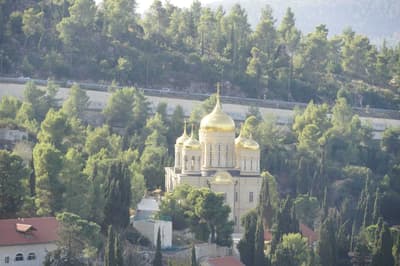
The Russian Compound gives the idea a tangible Jerusalem context: pilgrims set out toward places sacred to their faith, and hostels, services, and a church were built for their needs. Earthly Jerusalem was not paradise itself in their eyes; the journey to it formed part of a life of prayer, faith, and drawing closer to the sacred.
We will see what was established around the Ottoman Maidan and ask how hope for a spiritual world leaves behind very large structures in the material world.
The Ethiopian Community: Paradise Is Also Found in the Name of the Place
On Abyssinian Street, now Ethiopia Street, the connection is not merely an idea imposed on the tour: the Kidane Mehret Church is located in the Debre Genet compound. The name Debre Genet is translated in sources as “Mount of Paradise” or “Paradise Monastery”; Kidane Mehret means “Covenant of Mercy.” Thus, the name itself invites visitors to think about a space of holiness, mercy, and refuge within the city.
The church belongs to the Ethiopian Orthodox Tewahedo tradition, with its own customs and artistic language. It should not be treated as a replica of the Russian church, nor should the Ethiopian Christian community be identified with Ethiopian Jewry. The circular structure, sacred areas, and images express a rich local Christian tradition.
Here we will ask how a wall, courtyard, prayer, and an ancient name can mark a passage from street life into a sacred world. This does not claim that the compound is the historical location of the biblical garden.
Paradise in Islam: Gardens, Water, and Abundance Without Shortage
In the Quran, paradise, al-Jannah, is described through gardens and rivers. In Sura 47, verse 15, rivers of water, milk, wine, and honey are mentioned, along with fruits and forgiveness from God. These are descriptions of the reward promised to those who fear God, combining abundance with religious and moral meaning.
In an environment where water and shade are so essential to life, it is possible to understand the power of these images. This is a way to deepen one’s reading of the text, not an explanation that exhausts the Muslim faith. Here too, paradise should not be reduced to bodily pleasures alone, nor should it be assumed that all believers interpret the descriptions in the same way.
The Ottoman background and the story of Jerusalem’s Arab residents open a window during the tour for comparison between the traditions. Arab identity is not necessarily Muslim identity, and the discussion does not add a visit to a mosque that was not scheduled.
The Paradise of Musrara’s Children: Freedom Beyond the Fence
One of the surprising connections among the route’s stops is a documented story, not merely a nostalgic image. The exhibition “Childhood in No Man’s Land” from the Musrara Collection presents memories of children who grew up near the urban border. A space perceived by adults as dangerous became, in their memories, an area of play, discovery, and adventure.
They described tall vegetation, reeds, fruit, and abandoned structures in which they searched for finds. Behind the magical image were the danger of snipers and sanitation hazards; the marsh in the area was also fed by sewage. This is the gap between reality and memory.
Add to calendar
Share this event:
Similar events
Loading similar events...