OGO!
Disassembling and Reassembling: Postmodernism in Cinema
Wednesday (tomorrow)
November 11 at 9:00 PM
Daily until Nov 30
הארבעה 5, תל אביב-יפו
Summary
A film program on European postmodernism in the 1980s and 1990s, featuring films by Greenaway, Almodóvar, Besson, and others. At the Tel Aviv Cinematheque.
Descriptiontranslated from Hebrew (original)
A new program at the Cinematheque returns to the moment when European cinema discovered that the past is not only heritage. It is also raw material. In the 1980s and 1990s, European cinema began to treat its past somewhat differently. Instead of continuing a single tradition, it dismantled it, quoted it, mixed it with popular culture, genres, fashion, advertising and music, and then reassembled it into a new cinema. In Peter Greenaway’s work, form becomes almost an obsession; in Pedro Almodóvar’s, melodrama meets punk, desire and camp; and in the films of Carax, Beineix and Besson, the city, the body and love become a larger-than-life cinematic spectacle.
Dismantling and Reassembling – European Postmodernism at the End of the 20th Century
The program “Dismantling and Reassembling” returns to the moment when European cinema discovered that the past is not only heritage. It is also raw material. In the 1980s and 1990s, European cinema began to treat its past somewhat differently. Instead of continuing a single tradition, it dismantled it, quoted it, mixed it with popular culture, genres, fashion, advertising and music, and then reassembled it into a new cinema. In Peter Greenaway’s work, form becomes almost an obsession; in Pedro Almodóvar’s, melodrama meets punk, desire and camp; and in the films of Carax, Beineix and Besson, the city, the body and love become a larger-than-life cinematic spectacle. Later, Olivier Assayas turns his gaze toward cinema itself and toward the possibility of continuing to create in a world where almost every image recalls an image we have already seen. This is an opportunity to see on the big screen wild, beautiful, funny, sensual films that are exaggerated in just the right measure, and to encounter again a cinematic moment when it seemed that almost anything was permitted with image, story and style.
The Big Blue – Director’s Cut | The Big Blue
A cult film about the fascinating world of free diving. The plot follows the complex relationship—an interplay of deep friendship and fierce sporting rivalry—between two free divers who have been bound to the sea since childhood: the French Jacques Mayol and the Italian Enzo Molinari. Jacques is a quiet, almost mystical figure who feels a profound and fundamental connection to the water and dolphins, and at times seems to belong more to the underwater world than to the land. Enzo, by contrast, is flamboyant, hot-tempered and highly competitive, currently the world champion in free diving. Their rivalry leads to an increasingly intense competition to break depth records in diving without oxygen tanks—an endeavor in which the human body reaches the limits of its capabilities and even goes beyond them, with a constant risk to life. Alongside his competition with Enzo, Jacques meets Johana, an American insurance agent who arrives in Provence and falls desperately in love with him, leading her to leave everything behind and follow him into the world of the sea. As the dives become deeper and more dangerous, the film shifts from the sporting dimension to an inner and philosophical journey about humanity’s unfathomable attraction to the unknown and the blue depths.
Pepi, Luci, Bom and Other Girls on the Heap | Pepi, Luci, Bom and Other Girls on the Heap
Pepi is raped by a corrupt police officer. In revenge, she befriends Luci, his masochistic wife, and sets her up with Bom—a lesbian singer who humiliates her. When the film was first released in the United States in 1992, after Almodóvar had already become a rising star, Rita Kempley wrote in The Washington Post that “Almodóvar seems to be lowering the water on his idol here.” There is something to that. The film contains a succession of wild, crude and erotic scenes directed with unabashed pleasure (“The safest way to watch the film is with a condom over your entire body,” Kempley wrote). The cinematography is still raw and the plot fragile, but one can also find here, in certain doses, everything that would later appear in his work: the combination of emotion and desire, the sweeping power of melodrama, and a colorfulness that conquers the senses.
The Lovers on the Bridge | The Lovers on the Bridge
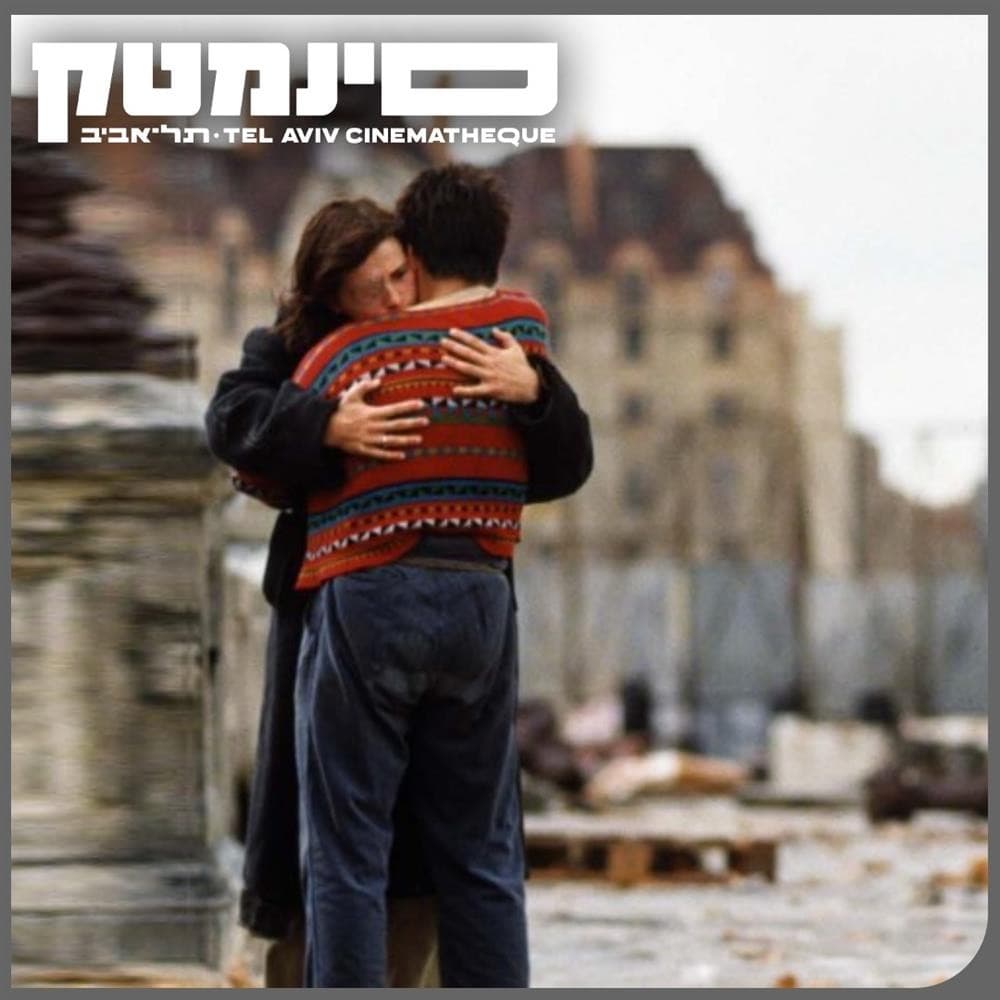
The film unfolds a love story between two drifters against the backdrop of Paris’s oldest bridge while it is closed for renovations. Alex is a street clown addicted to alcohol and tranquilizers, and Michèle is a painter who has deteriorated into street life as a result of an abusive relationship and a pain that is gradually making her blind. The film follows them, along with Hans, an older homeless man, in the harsh reality of their lives on the street. Michèle and Alex’s lives stabilize, but Michèle’s family begins searching for her, and an innovative treatment that could restore her sight is discovered. Afraid that she will leave him, Alex tries to prevent her from learning about it and keeps her as his prisoner. The streets, skies and gutters of Paris all serve as the setting for a story told through a succession of dazzling images that dominate the film’s language.
Nikita | Nikita
The film that marked Luc Besson’s breakthrough and spawned an entire series of remakes and other adaptations. Luc Besson directs one of the classics of suspenseful crime cinema, centered on Nikita, a drugged-out punk girl who commits a crime carrying a severe sentence in court. But the French government gives her a second chance—the opportunity to buy her life through service to the government. A brilliant depiction of the metamorphosis undergone by Nikita, an irresponsible and utterly uninhibited young woman full of life, who receives a chance to reinvent herself through her considerable talent as an assassin—an opportunity that will drain her of every trace of humanity and force her to earn a false freedom.
Léon | Léon
Natalie Portman’s breakthrough film is a sort of charming action movie. The plot focuses on the developing relationship between a 12-year-old girl, Mathilda, and the hitman who saves her from the assassination in which her parents are murdered. Under his protection, she receives weapons training and prepares for an act of revenge, while repaying the big, taciturn man with reading lessons and unconditional love. Luc Besson directs this action film, a ’90s-style adaptation of Beauty and the Beast, with the same operatic quality that characterizes his entire career. With Jean Reno’s bear-like presence and Portman’s naïve charm, the result is a classic film.
Boy Meets Girl | Boy Meets Girl
Alex, a young Parisian abandoned by his girlfriend, wanders the streets and follows people. He falls in love with Mireille, a beautiful model he has never seen before, who has also been abandoned by a half-mad boyfriend. At a strange party marking the anniversary of the death of the hostess’s brother, Alex opens his heart to Mireille. Carax’s first feature film draws on a search for direction in an attempt to renew cinematic language, inspired by works of the past—from silent cinema, through Jean Cocteau, to Godard.
Irma Vep | Irma Vep
René Vidal, a director in decline, decides to make a remake of Louis Feuillade’s silent series Les Vampires. He believes that no French actress can play the role of Irma Vep, the leader of the gang, and therefore recruits Hong Kong action star Maggie Cheung, playing herself, for the part, despite the fact that she does not speak French. The set is chaotic, and a new problem arises every time. Jean-Pierre Léaud appears in the role of the director.
Bagdad Cafe | Bagdad Cafe
A relationship between a heavyset Bavarian woman whose partner abandoned her in the middle of the desert; a Black café owner in the middle of the Arizona wilderness; a down-and-out painter; a tattoo artist; an Indigenous bartender; and a host of other strange characters who happen upon this godforsaken place. A special friendship develops between the two women—the German tourist and the owner of the desert motel—despite their differences. A parable about fellowship and friendship growing despite cultural differences.
The Cook, the Thief, His Wife & Her Lover | The Cook, the Thief, His Wife & Her Lover
Peter Greenaway’s controversial film explores desire and the sacred suffering of the romantic triangle. As befits this extraordinary director, everything moves between dazzling, meticulous design and unbearable brutality—from intellectualism to cannibalism. In a restaurant, a great French chef cooks for a rude gangster and his guests. In the restroom, the thief’s wife falls in love with a quiet and mysterious guest—a Jewish librarian researching the roots of the French Revolution. From his kitchen, behind the scenes, the cook pulls the strings, serving as an allegory for the director himself. The dramatic events unfold against backgrounds in unambiguous colors: a green kitchen, a red dining room and a white restroom. The postmodernist statement relies on quotations and on the music of Greenaway’s regular composer, Michael Nyman.
Matador | Matador
After being injured in the ring by an enraged bull, Diego retires from bullfighting and opens a school for matadors. One of his students is Ángel. When Diego somewhat derides Ángel’s manhood, Ángel decides to attack his neighbor—unbeknownst to him, she is Diego’s mistress. The attack fails; Ángel confesses to crimes he did not commit; and a lawyer named María comes to his aid. Her cold temperament is also expressed in the way she impales men in her bed. Around these characters, Almodóvar created the film before us—a black comedy? A social farce? Almodóvar shakes sex and death, machismo and impotence, into an exciting cinematic work in a colorful, polished and self-assured style.
Drowning by Numbers | Drowning by Numbers
Cissie Colpitts drowns her unfaithful husband and takes advantage of the affection of an old friend—Henry Madgett, a lonely, lovesick coroner—to help her cover up the crime. But when Cissie’s daughter and granddaughter use the same method to solve problems in their marriages, Henry’s need to help the Colpitts women again and again begins to weigh on his conscience. Drowning by Numbers is one of Peter Greenaway’s most accessible and enjoyable films. The film is both entertaining and thought-provoking in the way it toys with subjects such as sex and death and celebrates the women’s conspiracy against men. The pleasure is enhanced by the excellent casting, the witty way the director incorporates numbers throughout the story, and the magnificent pastoral aesthetic.
Women on the Verge of a Nervous Breakdown | Women on the Verge of a Nervous Breakdown
Pepa, the film’s heroine, has everything: modern kitchen appliances, an advanced stereo system and an answering machine. When she calls a taxi, it arrives immediately, and it even has a sign inviting passengers to smoke despite the luxurious upholstery. Everything could have been perfect, were it not for married men leaving their mistresses and wives... Around Pepa, Almodóvar sets in motion a gallery of characters that the fresh screenplay brings together perfectly, with compassion and sympathy, despite the fact that personal tragedies are the key to the comic situations.
The Law of Desire | The Law of Desire
The story of a cheerful love triangle: Pablo, a successful director, seduces two young men, the pure Juan and the perverse Antonio. In an attempt to secure exclusive possession of Pablo’s love, Antonio pushes Juan off a cliff, killing him. But that is not the end of the story: Pablo has a sibling with whom he lives; that sibling—as is currently the case—underwent gender-confirmation surgery in order to satisfy their father’s desires. Thus the plot unfolds in a world where sex and death are mixed together.
Betty Blue | Betty Blue
Betty is a feline, impulsive 20-year-old waitress living with a modest, quiet 30-year-old writer. After she happens to find the novel he has written—the best she has ever read—Betty does everything in her power to turn her lover into a famous writer. He, for his part, is content with love and has no interest in fame. But when you live with Betty, who believes that wanting something is enough to achieve it, you had better be prepared for anything...
Would you like to enjoy all our new and worthwhile benefits and exclusive events throughout the city?
Download the My DigiTel app and look for the Events and Benefits Lobby >>
Everything is waiting for you in the palm of your hand: plays, performances, concerts, festivals, free tours, benefits at businesses and sporting events, and more!
Add to calendar
Share this event:
Similar events
Loading similar events...