OGO!
Foraging Course at HaHorshot Park – Late Registration
Friday (in 3 days)
November 27 at 9:00 AM
Runs on Fridays at 09:00 until Apr 11, 2027
All dates
November 27December 4December 11December 18December 252027January 1January 8January 15January 22January 29February 5February 12February 19February 26March 5March 12March 19March 26April 2April 9
Parking lot, Derekh Ben-Zvi 79, Tel Aviv-Yafo
Weather · Tel Aviv
Key facts
- Sessions
- 8
- When
- Fridays (at intervals of 3–4 weeks), from 9:00 to 12:00
Cost
900-1200 ₪
Summary
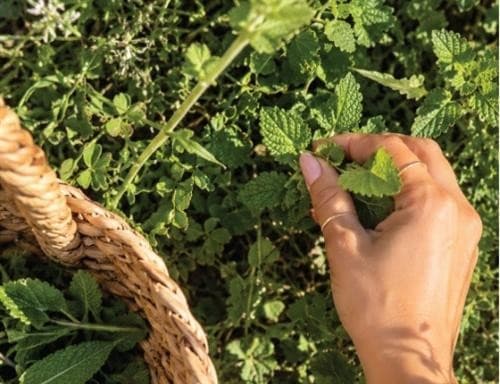
An 8-session foraging course on wild plants, identification, and uses in the kitchen and medicine cabinet. The sessions take place on Fridays at HaHorshot Park.
Descriptiontranslated from Hebrew (original)
The Foraging Course of the School of Sustainability at HaHorshot Park, led by Kobi Yehezkel.
8 sessions — Fridays (at intervals of 3–4 weeks), from 9:00 to 12:00.
In recent years, awareness and exposure to the world of foraging wild plants for various uses in the kitchen and medicine cabinet have been growing. The interest people are showing is not new, but rather a return to patterns that were customary throughout most of human prehistory and history.
People have always been interested in plants, studying and mapping them according to their properties, and always finding and creating diverse ways to use them for their needs.
With the development of technology and industry in the modern world, we gradually found ourselves surrounded, on the one hand, by an endless abundance of readily available consumer products, and, on the other hand, by urban spaces that, by their very nature, distanced us from wild plants.
The vast knowledge accumulated and learned through many years of intergenerational transmission was neglected and almost forgotten, except in cultures that, by their very nature, remained close to the land.
In the course, we will be exposed together to, investigate, and learn about dozens of plant species and botanical trends in sessions spaced out to allow us to observe changes in the field according to the season—from germination in autumn to seed dispersal at the beginning of summer.
Discounted price for residents.
Payment can be spread over 12 installments.
Each session will focus on a botanical trend and examples we find in the field.
First session — 20 November — Germination
The session has taken place. It will be possible to make it up in the next cycle.
We will play a short getting-to-know-you game, followed by an introductory talk about trends in botany and the uniqueness of the Land of Israel.
We will also discuss trends and principles in foraging.
We will then go on a tour focusing on seedlings and the germination stage.
Seedlings are known to have particularly high nutritional value, but alongside the many benefits they offer, there are two main difficulties:
- The difficulty of collecting enough raw materials
- The danger resulting from mistaken identification
We will learn how to overcome these difficulties, and at the end of the session we will receive a recipe for a Sicilian seedling salad with wild fennel and bitter orange.
Second session — 18 December — Development of a Mature Plant
A session focusing mainly on the advanced germination stage, when seedlings turn into the green plants we all know.
In this session, we will observe the changes that have taken place in the field.
The tiny seedlings we saw in the previous session, which looked similar to one another and also resembled other plants, gradually become plants in their mature form.
We will learn that mallow is actually a general name for many plant species, and we will also learn that there are many other green plants suitable for eating.
We will learn to identify the plants and distinguish between them, and receive a recipe for a traditional greens dish from Arab cuisine.
Third session — 8 January — Winter Bloom
In this session, we will delve further into the diversity of vegetation and focus on the waves of red blooms characteristic of this period.
We will learn about the role of flowers and the evolutionary idea underlying the variety of colors and shapes of flowers.
We will also learn about edible flowers and flowers useful in the medicine cabinet.
Fourth session — 5 February — Toxicity
The fourth session will be devoted to a significant topic in foraging skills: toxicity.
We will learn how plants protect themselves and become acquainted with the most poisonous plant in the world.
We will also learn that poison in a certain dosage can be used as medicine, as well as methods for eliminating or reducing toxicity in plants.
Fifth session — 19 February — Grains and Preparing for Spring
In this session, we will identify the first signs of the changing season.
How the decrease in rainfall and the length of the day affect the environment.
We will learn about spring and the reasons for its name, which are rooted in botanical and agricultural characteristics.
Sixth session — 19 March — Spring Bloom
In this session, we will return to learning about flowers, with an emphasis on spring flowers.
We will learn about their role and become acquainted with edible flowers.
In this session, we will learn a recipe for making flower spring rolls.
Seventh session — 16 April — Pickling and Herbal Preparations
We will devote the penultimate session of the course to seed dispersal, pickling, and herbal preparations.
In this session, we will talk about the world of fermentation and pickling. We will become acquainted with plants and fruits in the park that are suitable for this purpose.
Eighth session — 21 May — Closing Party
Members of the group will receive foraging and cooking assignments to create a complete foraged meal.
For updates in the School of Sustainability’s quiet group:
Link
Add to calendar
Share this event:
Similar events
Loading similar events...