OGO!
Cranes Square: Adi Roz
December 3 – 26
Thursday (in 9 days)
Artists' House Tel Aviv
Elkharizi St 9, Tel Aviv-Yafo
Weather · Tel Aviv
Summary
An exhibition of drawings by Adi Roz about the cranes at Kikar HaMedina. 03.12.2026–26.12.2026 at the Tel Aviv Artists’ House, 9 Alharizi St.
Descriptiontranslated from Hebrew (original)
“A city is not streets, perspectives, chimneys, and antennas. A city is an image, a metaphor.” (Sasha Okun, An Affair with a Pencil: Notes in the Margins of Drawing, 2022).
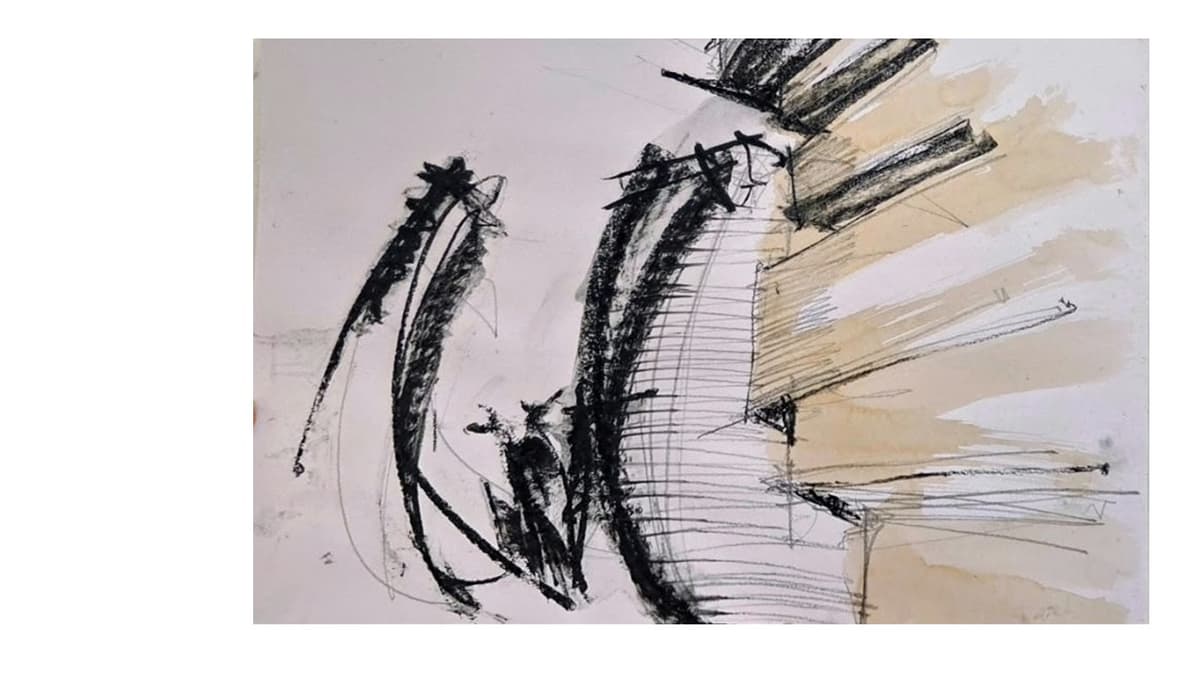
The exhibition Crane Square reveals, for the first time, architect Adi Roz’s series of drawings and presents the layer of temporary infrastructure at State Square in Tel Aviv–Jaffa. Adi Roz, a graduate of Thelma Yellin and Bezalel, is a conservation architect and artist who lives and breathes the city. While building conservation is her day-to-day occupation, the drawings turn the spotlight on the cranes and offer an enthusiastic and passionate view of the living skeleton of the city’s development. The temporary network, sometimes perceived as an urban nuisance, becomes in the drawings a dynamic visual celebration of dozens of steel arms circling the skies above State Square like a giant mobile and changing the skyline. In recent years, the city has reached peaks of infrastructure development and new construction, and dozens of cranes have begun to gather there, temporarily concentrated and hovering in an exceptionally aesthetic display, like a sculptural element or piece of jewelry—a kind of engineering adornment.
At State Square, burned into the memory as an open square, significant construction had been planned but was delayed for decades. The feverish construction led Adi, over the past three years, to come to the square frequently to observe, marvel, and draw again and again. This was in response to a fleeting moment, charged with Sisyphean movement and intensity—an instinctive expression of the excitement and pace of the square’s transformation. At the same time, the October 7 disaster occurred, and the struggle to bring back the hostages began—a long and significant struggle that was present in daily life, accompanying the thoughts and creative work and documented in writing within the drawings, forming an Israeli life diary.
Adi arrives at the square with a notebook and sheets of paper and draws each time from a different angle, returning obsessively until the momentary magic and power pass onto the page. The movement of drawing attempts to keep pace with the square’s construction. Paper and graphite, charcoal and coffee stains become the scene of the event. At the beginning of the journey, the drawings focus on the cranes, and as the towers were built and grew taller, they too appeared in the drawings. Finally, the hostages returned, construction is nearly complete, the mass of cranes dissipates, and the new, complete perspective focuses on the dialogue between the new towers and the Brutalist buildings surrounding the square that has become a symbol.
The exhibition reveals, for the first time, drawings unfolding across a range of states of cranes and towers. The drawing appears as a swift stroke of a line, attempting to immortalize the cranes’ agile movement and keep pace with construction—a moment distilled in time. The exhibition is urban and presents the act of construction itself, documenting the transformation day by day and the dramatic movement arising from a round square, inverted pyramids, dozens of cranes in the sky, concrete mixers, and twisted towers in the center. The exhibition enables visitors to delve into the long and influential interim period of everyday life and confront the emotions and thoughts arising from the transformation of State Square. Crane Square is an invitation to celebrate impermanence, observe passing images, pause at the elusive stage as it dissipates, and marvel at the cranes just before their time comes to leave.
“I’ve seen things you people wouldn’t believe … All those moments will be lost in time … like tears in rain. Time to die.” (The crane’s lament from the monologue “Tears in Rain,” spoken by the android character Roy Batty just before his death in the film Blade Runner [1982].)
Curator: Architect Irit Saig Orion
Language editing: Dr. Amit Kama
Add to calendar
Share this event:
Similar events
Loading similar events...