OGO!
Nighttime Conversation: Efrat Yaron
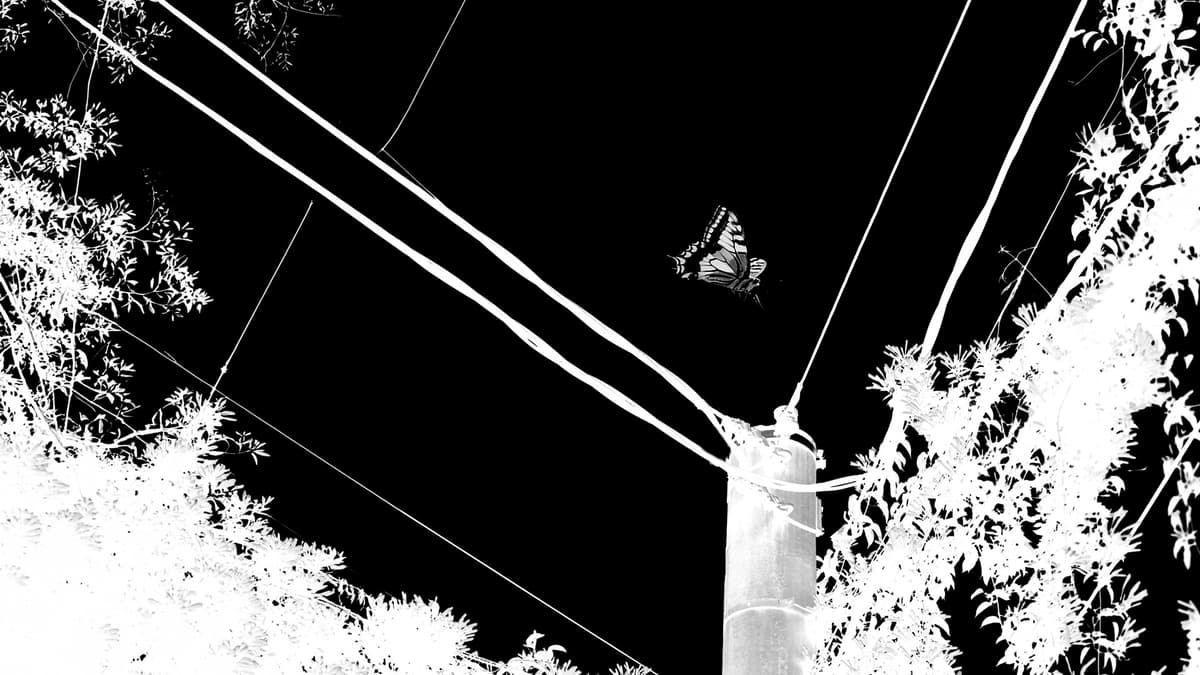
December 3 – 26
Thursday (in 9 days)
Artists' House Tel Aviv
Elkharizi St 9, Tel Aviv-Yafo
Weather · Tel Aviv
Summary
A video installation by Efrat Yaron exploring the encounter between nature, city, interior, and exterior. 03.12–26.12.2026 at the Tel Aviv Artists’ House.
Descriptiontranslated from Hebrew (original)
The work creates a dialogue between inside and outside, between nature and the city, and between tangible reality and the reality constructed through the projected image. It examines the possibility of blurring the boundaries separating spaces and creating a new reality from them, in which nature and architecture exist within one another.
Through the window of Cell 9, a natural world existing within the enclosed space is revealed. Photographic documentation of the courtyard surrounding the cell serves as the basis for additional layers of moving images: flying butterflies, birds arriving in the courtyard, and flowers opening and blooming. The events, filmed at different times and in different places, accumulate and merge with one another, creating an imagined ecosystem in which elements that do not necessarily meet in reality coexist side by side.
The window plays a central role in the work: it serves as a tangible boundary between the viewer and the interior space, but also as a frame enabling an encounter between two worlds. The viewer, standing in the courtyard, looks through the window into the cell and encounters anew the environment in which they themselves are standing. The outside is reflected within, but does not return as it was: it changes, multiplies, and fills with new life. In this way, a dual reality is created, in which the real courtyard and the projected courtyard coexist, each altering the way the other is perceived.
Through the layers of video, a space is constructed that is no longer subject to the boundaries of place or time. Natural events are removed from their original context, brought together, and assembled into a new environment. Nature, usually perceived as existing outside the building, penetrates into it through the projection, while the architectural space becomes a kind of artificial habitat. The encounter between the images does not seek to reproduce nature as it is, but rather to suggest another possibility for its existence.
Within the urban space, where nature exists alongside buildings, walls, and windows, a new relationship emerges between what grows independently and what is built by humans. The work proposes viewing this encounter not as a struggle between two opposing forces, but as an ongoing dialogue in which each influences the other.
“Night Dialogue” also takes place between the visible and the hidden, between what lies beyond the window and what is revealed only through it. The window, which usually enables a view from inside to outside, reverses the direction of observation here. The viewer remains outside, while nature enters within, reorganizes itself, and creates a world that can be seen but not entered. Thus, Cell 9 becomes an intermediate space, a place where reality and image meet, and where the boundaries between nature and the city, between inside and outside, and between what exists and what is possible remain open.
Language editing: Dr. Amit Kama
Add to calendar
Share this event:
Similar events
Loading similar events...